30 November 2006

Norwegian mystery

Dan Conrad asked, since he knows I read mystery novels, if I'd read anything by Karin Fossum. No, I hadn't. As a matter of fact, I'd never heard of her.


Fossum is a Norwegian author whose first mystery, Se Deg ikke Tilbake!, was translated into English as Don't Look Back in 2002. According to an article at Wikipedia, she's known in Norway as the "Norwegian queen of crime."

Well, Northfield is one of the centers of Norwegian-American culture in the U.S. A student can earn an undergraduate degree in Norwegian, at St. Olaf College right here in Northfield. So, when I checked the Northfield Library, I almost expected to find copies of Fossum's books in Norwegian and English. Not so.

Neither the public library, the St. Olaf library, nor Carleton College's library had a copy of any of her books! The Southeastern Libraries Cooperating (SELCO) Interlibrary Loan Service found a copy for me in The Blooming Prairie, Minnesota library. I'm glad they did.
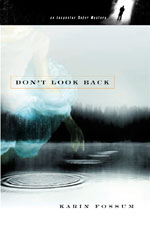

Fossum creates a good plot and tells a good story in Don't Look Back. The story centers on Inspector Konrad Sejer and his young assistant. Just don't expect much action. Most of the book is told from Sejer's point of view as he asks questions and puzzles over the answers he collects. The story and the way it played out reminded me very much of the British mysteries on Masterpiece Theater's Mystery or of the unfolding stories on one of the CSI programs. (It was made into a mini-series for Nowegian television in 1999.) What Sejer learns helps him discard misleading ideas and directs him to the bad guy. Along the way there are glimpses of the investigating characters and village life in Norway. (I could have done with more of both.)

I liked this one. I'll go asking for others (there are two other Fossum mysteries in the SELCO system) when I return Don't Look Back.


27 November 2006

More mystery from northern Wyoming

Margaret Coel has written several entertaining mysteries set in northern Wyoming, not far from Saddlestring in Twelve Sleep County" that C. J. Box writes about. The proximity of the two settings makes me wonder whether the University of Wyoming sponsored a very successful writing school in that northern part of the state.

I've often felt that Coel had to resort to credibility-stretching plot devices to get her main character, Father John O'Malley, involved in resolving murder investigations that the state, local, and reservation police were conducting. A recovering alcoholic Jesuit from Boston who is serving a poor missionary parish on a poor Wyoming reservation is not in the middle of many crime waves. And most murders are crimes of passion committed by among friends or within families. Since there aren't that many murders in the sparsely populated counties of northern Wyoming, some manipulations are necessary to create murders that involve a mission priest.

I haven't read one of Coel's books for a couple of years, but my impression is that Father O'Malley and the people around him did things that were a bit unbelievable. But, it's fiction, not reality, I keep reminding myself. These stories can be thought of as puzzles to be figured out before the end of the book.


All of this is introduction to The Eye of the Wolf, a Margaret Coel book I read over Thanksgiving weekend. There were fewer unbelievable plot twists in this one than I expected, and there were more reasonable "hooks" to draw Father O'Malley into contact with the people involved in the events "retold" here. I didn't shudder and say to myself, "Oh, no, that would never happen!"

The story is well-told. I didn't get bored waiting for events to unfold and I didn't get lost because Coel skipped essential details. The book was great entertainment for those quiet times in a weekend of overeating and family togetherness.

For some reason, I kept imagining that most of the story was set at night, when in fact, most of it occurred in daylight. That could have been because of my lack of imagination. The other thing that slapped me in the face about Coel's writing was that she rammed forceful verbs into sentences. Many times, the action-packed verbs were marvelously inappropriate (I write with intended irony). I don't slam my car door every time I close it. I don't thrust my hands in my pockets every time I search for my keys. The characters in The Eye of the Wolf seem to (although they may just have done it more often than I would have).

I was really disappointed with the resolution. After offering a couple obvious explanations and many "clues" for four murders and an attempt of the life of Father O'Malley, Coel explains the events with the equivalent of a curve ball that seemed to come out of left field. Oh, well, the story was entertaining and it helped me enjoy a fine 5-day weekend that involved over 1,100 miles of driving.


13 November 2006

Once again with the mind candy


I just read another of C. J. Box's novels. Nancy found these books in one of our favorite West Yellowstone bookstores and brought 5 of them home last summer. I've been reading them in chronological order.

This was his fourth, the 2004 Trophy Hunt.

To me this was the best of his novels to date. Box wrote on his web site that he wanted this book to be a "real mystery." I think he succeeded. There was much less of the brooding foreshadowing that dominated his first three books, and there was much more complexity to the plot. And there were hints and red herrings about what was really going on.

The main character is Joe Pickett, an ambitious game warden, and the story unfolds from his perspective. As a reader, you'll know little that Joe doesn't know before he knows it. But, if you're like me, you'll think you've figured out the meaning of all those clues sooner than Joe does. If you're better at that game than I am, maybe you will figure it out. The plot's complexity will probably keep you from figuring it all out.

That leads to my one reservation about the book. The complexity seems to keep author Box from figuring it all out too. His character Pickett bemoans the "woo-woo" part of his friend Nate's take on the world. Picket is an empiricist, plain and simple. He has no time for spiritual or supernatural explanations. But Box relies on some that "woo-woo" to tie up his story. Box needs coincidence and the retribution of nature to end his story. Ah, said Pickett on the last page of the book, "I hate that woo-woo crap." His friend Nate replied, "I know you do," and smiled.

I dislike that "woo-woo crap" too. I also smiled, when I finished the book. There's something to be said for just retribution. Now, I'm ready to go on to the fifth novel.

See C. J. Box's web site on Trophy Hunt

14 October 2006

Guilty Pleasure

Last Thursday, I drove a bit over 300 miles to Beloit and Rockford in order to have lunch with a colleague near Edgerton, Wisconsin, see granddaughter Jaime and her parents, and pick up David to bring him home for mid-term break. I was going to have time Thursday night and Friday morning in Beloit, so I grabbed the third of C. J. Box's murder mysteries.

Nancy had "discovered" Box's books in a West Yellowstone bookstore, and the first two were pretty good diversions. They aren't great literature, but Box created some interesting characters and not everything works out well at the end of the ambitious and violent plots.

The "star" of these books is a Wyoming game warden who works in the north central part of the state. He's a straight arrow and a good guy, who is human enough to be tempted to respond in kind to the real evil he confronts. The plots have seemed realistic and authentically western. Dick Cheney would recognize these people and events, although he probably wouldn't like the political sentiments that are implied.


This book is Winterkill, and the plot centers on the actions of frustrated, crazy, and incompetent bureaucrats (mostly U.S. Forest Service and FBI in this book). Other players include a tribe of anti-government activists, a couple of corrupt judges, and a violent hermit with a conscience. The stories are so well-told that I was entranced. At one point, I was so wrapped up in the action, I was late meeting David after he turned in his last paper before break. I could hardly wait to get home so I could finish the book.

Now, I always feel a little guilty reading books like these. Shouldn't I be reading something more substantial? something deeper? Something like Old Jules that raises significant questions like the one Dan Conrad raised below?

Then I thought about alternatives to reading things like Winterkill. TV? Radio? Writing things myself? Surfing the Internet?

I almost never get as wrapped up in a television show as I get wrapped up in a book. These days I watch TV with a computer on my lap so I can look things up or play a game in those great gaps between those moments when paying attention is necessary. Radio? I drive with the radio on and rarely remember what was on. Books are still incredible. Even those action/adventure/mystery books that fall far short of being fine literature. If you want a good diversion and and action-filled (and violence-filled) story, check out C. J. Box's books. The first one was Open Season. The second was Savage Run. This one was Winterkill. It probably works best to read them in sequence, but it's obviously not necessary.


09 October 2006

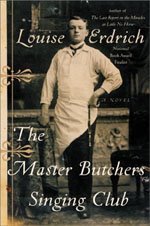
The Master Butchers Singing Club

The little cabin on Little Blake Lake is a place for reading. I read another book there over the last three visits. The vistas, the critters, and the solitude all beckon me back to Sidetrack, but the reading opportunities, away from the distractions of everyday living, are equally attractive.

On Sunday, I finished The Master Butchers Singing Club by Louise Erdrich. The book is a couple years old, but I just got around to reading it. I mostly enjoyed the experience.


The characters within the novel are wonderfully drawn and most of the stories are well-told. Delphine and Eva strong, determined women in search of themeselves, Fidelis and Cyprian, men escaping from their World War I experiences and themselves, and even Fidelis' sons, immigrants' children, are all exciting people. Episodes in the book are intriguing tales.

But this book is bigger than the collection of stories it consists of. It is rather like this book is the core of a whole series of novels, which are as yet incomplete. There is the one about Delphine and Roy (her presumptive father) and Delphine's search for her mother. There is another novel about the connections between Delphine, Fedelis, Eva (Fidelis' first wife), and the four sons of Fedelis and Eva. There is another novel inside this one about those children growing up in North Dakota and being divided by a mother's death into groups of brothers who fought on opposite sides of World War II. There's another novel about Cyprian Lazarre, another man in search of himself. These all could be novels, but they're not. Maybe they will be. Maybe other stories in this book will be novels. I'd like to see them. I don't know that I'd like them, but they'd be worth reading. In other words, I'd expect them to be a lot like Erdrich's other books.


28 September 2006

Who would you like to write your biography?

Dan Conrad wrote about a book he waded through. On the other side (after the reading was done) he found a question that deserves some thought and discussion. That's exactly what the "Comments" link at the bottom of the entry is for. If you'd rather, you can e-mail your comments to "Reading AtSymbol SideTrack Period org" (I presume you can translate that code into the mailing address while automated spamming programs won't steal it and fill my mail server with junk mail. Remember, no spaces allowed in e-mail addresses.)

Dan wrote:

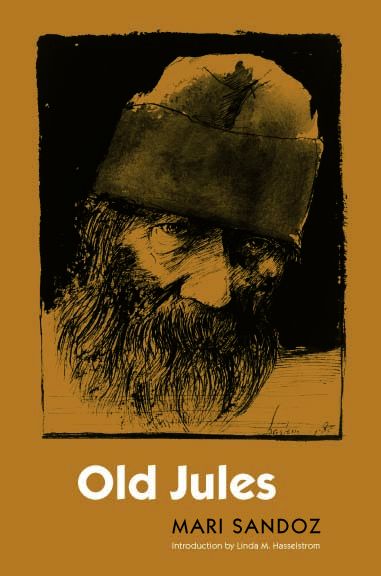
"On a recommendation from a friend, I recently read Old Jules, the biography of an important and eccentric early Nebraska settler written in the 1930s by his daughter, Mari Sandoz.

"It was a hard book to read or, rather, a very good book about incredibly hard times. I’ve read a number of books about that area and era, including most all of Willa Cather, but none of them depicted life in so raw a fashion or as being so desperately bleak as did Ms. Sandoz. I will never lose the image of a young woman, naïve and full of hope, getting off the train in her Eastern or European finery and looking about to identify her no doubt idealized prospective husband and finding instead an old, crippled, dirty, unkempt, uncouth, smelly, dirt-poor tyrant (Old Jules) instead.

"Besides being a powerful (though perhaps overly long and detailed) account of the struggle for existence in Nebraska in the late 1890s and early 1900s, it is notable on another account as well. This is a biography written by a daughter about her own father. She writes with a kind of grudging respect for his accomplishments, and maybe a tinge if filial loyalty, but with no hint of warmth or love for him as a person. It seemed that Old Jules had no capacity for loving his daughter (or wives or other children or anyone else) either. Perhaps love and kindness are luxuries of more prosperous times.

"This made me think about biographies, and who writes them. Old Jules was written by a daughter, and while his achievements are duly noted, it is the person of the man that dominates: particularly his coldness, crudeness and obduracy. Imagine that the biography had been written by a history professor at the U of Nebraska or was a publication of the Nebraska Horticultural Society. Then we might have an inspiring tale of a frontier hero, dominated by accounts of his struggles and triumphs and ultimate contributions (which were considerable) and with personal life serving only as faint and relatively unimportant backdrop.

"It made me think about how, to our own children, our professional achievements are of relatively little interest and significance compared to how they observe and experience us as a person, as a parent, spouse, brother, neighbor or friend.

"Who would you like to write your biography?"

And I'd like to add a couple more questions to Dan's: What do you hope your children's version of your biography sounds like? What do you think it will sound like? What biography of my father have I passed on to my youngest son who has no memories of his grandfather?


See also


20 September 2006

Banned Book Week

September 23-30 is Banned Book Week

Read a Banned Book

Get a poster and action suggestions at The American Booksellers' Foundation for Free Expression

19 September 2006

New Beginnings

It's a new beginning.

I flew to South Bend, Indiana to teach a workshop for AP teachers. It's a short flight, so I picked up a short book at River City Books: The Staggerford Flood by John Hassler.

A few years ago, I read several of Hassler's novels and got a little tired of what I saw as his Pollyana-ish perspective. On the other hand, I did have good memories of the characters he created. So I took the book on the airplane with me.

It's the story of a reunion of a group of people who were stranded by a flood for a few days. The reunion is complicated by improbable number one: a death that, in some way, might threaten a the continuation of a dying tiny town. The complication is resolved with improbable number two: an impersonation that would never fly in a small town.

The characters are still the strong part of Hassler's work. I enjoyed reading about them.

The publisher has a reading guide for The Staggerford Flood.

A review from Curled Up With a Good Book says, "...This novel perfectly showcases Hassler’s talent in reminding us of days gone by with memories of simpler times. With Garrison Keillor and his Lake Wobegon, Hassler is the undisputed muse of Minnesota. Quirky and wry, Hassler’s characters are seductive and charming, offering the reader a respite from the stresses of everyday life: a visit back in time, when conversations were held on porch swings and grandparents lived only a block away."